
Discovery & Requirements
We determine precisely what your business problem is and establish success criteria before writing any code.
TekCroft is a custom AI agent development company within our AI services that designs, evaluates, and integrates custom AI agents for real business workloads. Each AI agent development project comes equipped with a written evaluation report before your users even get to see it.
Organic traffic growth
Response time
Expert Team Members
Client satisfaction
Most AI agent development services claim to transform operations. But few make it through to production.
TekCroft exists to close that exact gap.
Over 40% of agentic AI projects will be terminated by 2027 because of high costs and unclear ROI.
MIT study revealed that 95% of enterprise AI pilots have no measurable return.
CB Insight buyer interviews show that agents’ accuracy drops from 80% for simple tasks to 50% for complex ones.
The full life cycle of AI agent development, from planning to long‑term support, is included in the services we offer.

Our AI agent consulting services define the use cases and ROI potential before coding anything. We assess feasibility according to your current data, infrastructure, and budget first. Every roadmap follows your schedule, not a pre‑defined one.

Every custom AI agent is constructed specifically for your unique workflow, data, and stack. We choose the model, memory system, and tool calling logic based on each individual use case. Every deployment is done on production‑ready frameworks such as LangChain and LangGraph.
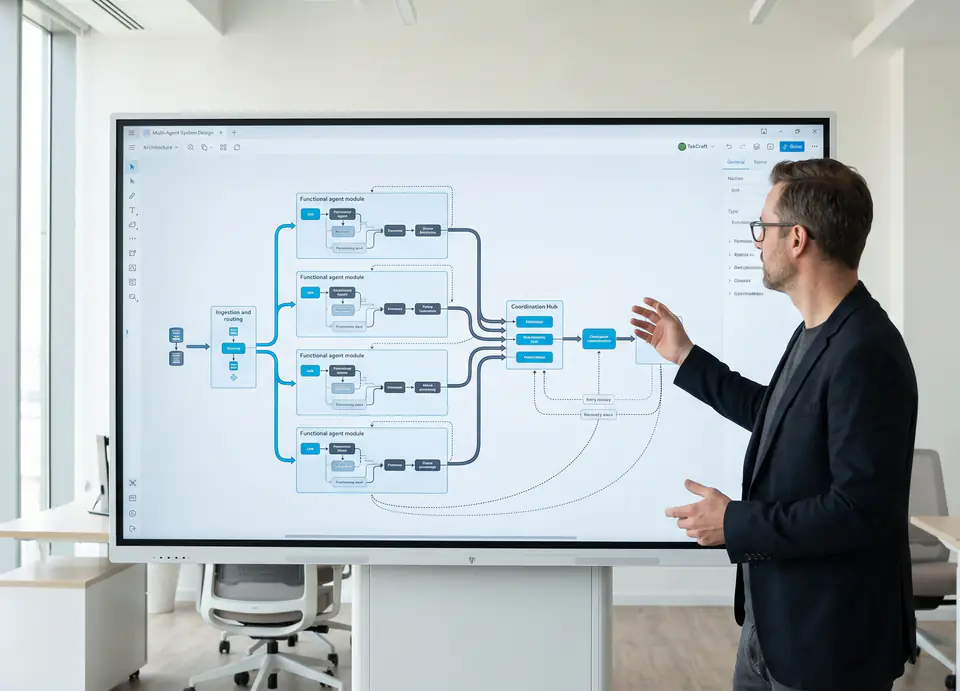
We design multi‑agent systems with clear task boundaries to avoid overlap. All the agents have their own tasks, ways to communicate, and failure recovery plans. This prevents coordination issues that cause most multi‑agent designs to fail.
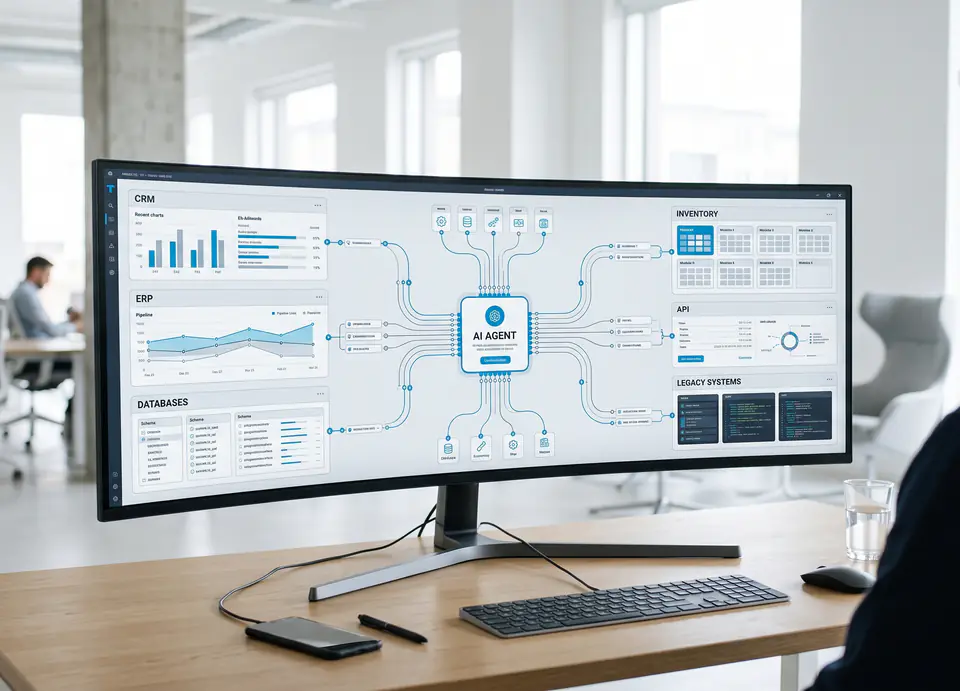
Our AI agent integration connects directly to your CRM, ERP, and legacy systems via their native APIs. There’s no proprietary lock‑in and no rebuild needed when you switch platforms. We also handle middleware and webhooks for legacy systems.
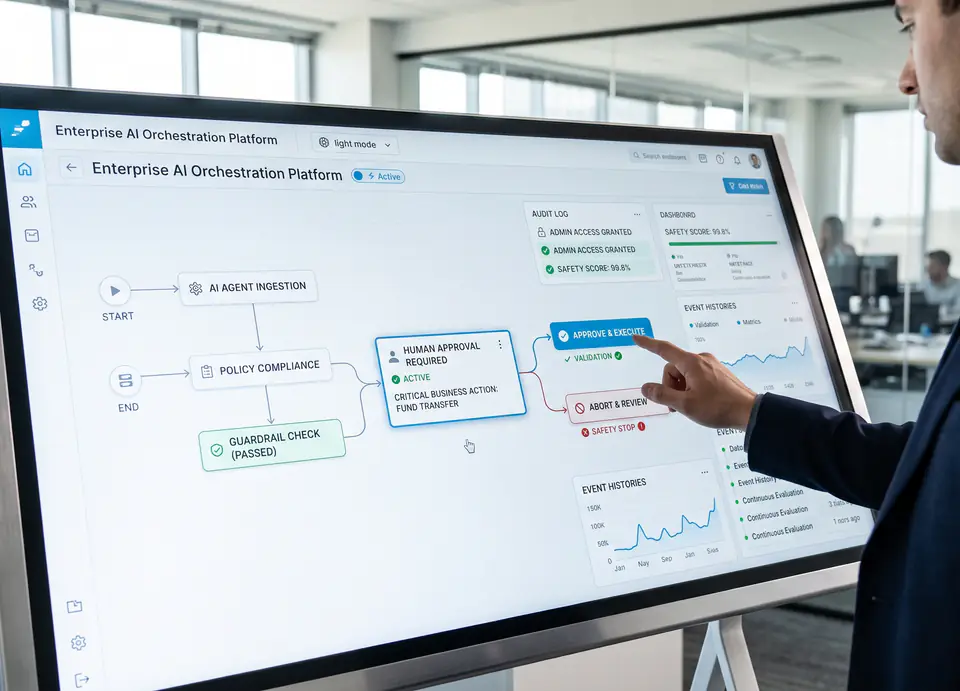
All agents go through AI agent testing and human‑in‑the‑loop review before going live. We measure accuracy against actual historical data, not artificial test cases. Guardrails are set up for each critical, non‑reversible action.
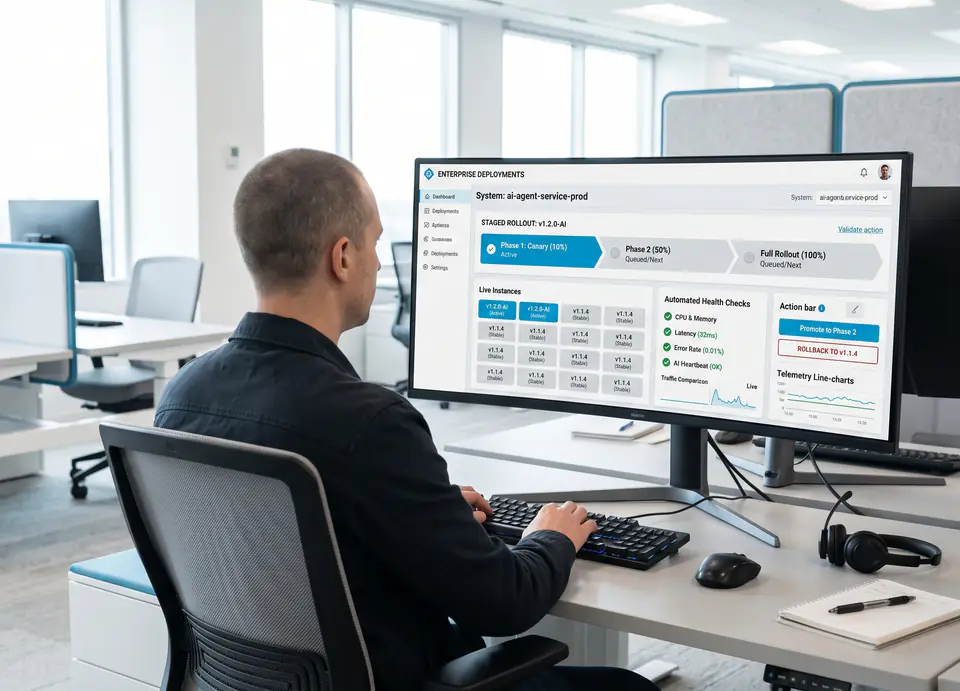
Our AI agent maintenance and support ensure ongoing performance as your data and requirements change. Drift detection and retraining are performed ahead of time, not afterwards. Rollout is done gradually, not with one risky release.
Ready to see which services fit your business?
Talk to An AI Agent Engineer ↑We develop AI agents for businesses in various sectors that have genuine operational complexities.
Every agentic AI development engagement goes through five structured phases, no shortcuts.


 The 5-stage process
0102030405
of five stages
We determine precisely what your business problem is and establish success criteria before writing any code.
We audit both data quality and system architecture simultaneously, because clean data drives agent reliability.
We develop an agent and integrate it into your live system at the same time.
Every agent is benchmarked for accuracy, with guardrails around every critical decision.
We deploy incrementally, then continue to maintain performance as usage increases.
As an AI development agency offering AI development services, we created the company based on what other agencies do wrong.
Each agent passes a test for 90%+ accuracy before release. There is no guesswork.
We integrate with your real systems, such as Salesforce, HubSpot, and even legacy databases. Our sandbox work becomes a live system, not a stuck demo.
Every high-stakes step has access control and human oversight according to SOC 2 principles.
We give you a clear scope upfront and no surprises afterwards.
We build with proven, production‑grade frameworks. No research‑grade software is used in client engagements.
An AI agent plans, makes decisions, and performs multi-step actions through your tools and data. A chatbot only answers within a specific conversation thread. See also AI chatbot development. An AI agent uses tools, connects to systems, and performs tasks with minimal human intervention.
Agentic AI development refers to designing systems that can reason, plan, and act autonomously. Agents make their own decisions and react to changing information. They carry out multi-stage processes by coordinating across different tools, APIs, and corporate data with little supervision required.
Costs depend on agent complexity, the number of integrations, and the number of workflows to be executed. The cost for task-level agents is much lower compared to enterprise-level multi-agent systems. We provide transparent, exact quotations after a short discovery call. No hidden charges, no vague estimates.
An AI agent developer is responsible for designing, developing, integrating, and testing the AI agents that function autonomously within your organization’s infrastructure. This encompasses the whole process from planning and development through testing and maintenance to ensure their continued accuracy as your processes change.
Yes, when your workflow is well-defined and data is easily accessible. The agents can take ownership of the repetitive and rule-based workflows end-to-end. However, complicated and complex tasks require human checkpoints. We design guardrails for exactly these cases.
Sectors with high volumes of work, extensive data, or rule-driven processes get the quickest returns. Healthcare, finance, retail, insurance, SaaS, technology, manufacturing, and logistics are some examples. Companies with repetitive manual tasks and accessible data can derive value from this. TekCroft operates in all these industries.
The timeline depends on the scope of the project, integrations, and testing requirements. An agent that operates on a single workflow generally takes a couple of weeks to develop and test. More complicated multi-agent systems or deep integration require more time, as they need more testing. We confirm exact timeframes during the discovery process.
The seven types are: Reflex, Model-based, Goal-based, Utility-based, Learning, Hierarchical, and Multi-Agent Systems. Each type of system caters to different business applications ranging from basic automation to advanced decision-making through interconnected agents.

Most AI agent projects fail before they reach real users. Yours doesn’t have to be one of them.
Tell us your use case, and we’ll show you exactly how it moves from idea to a live, working agent.